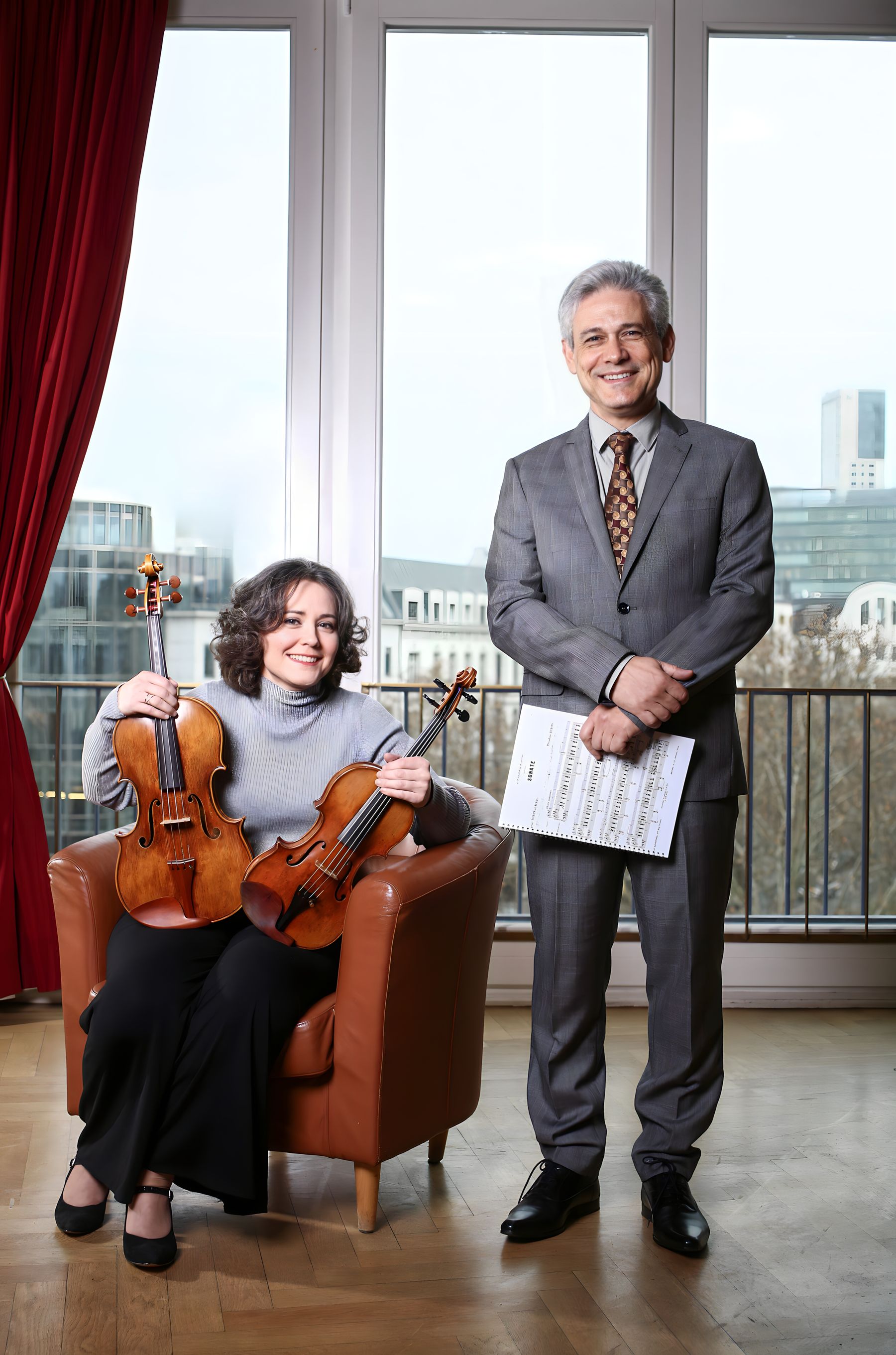
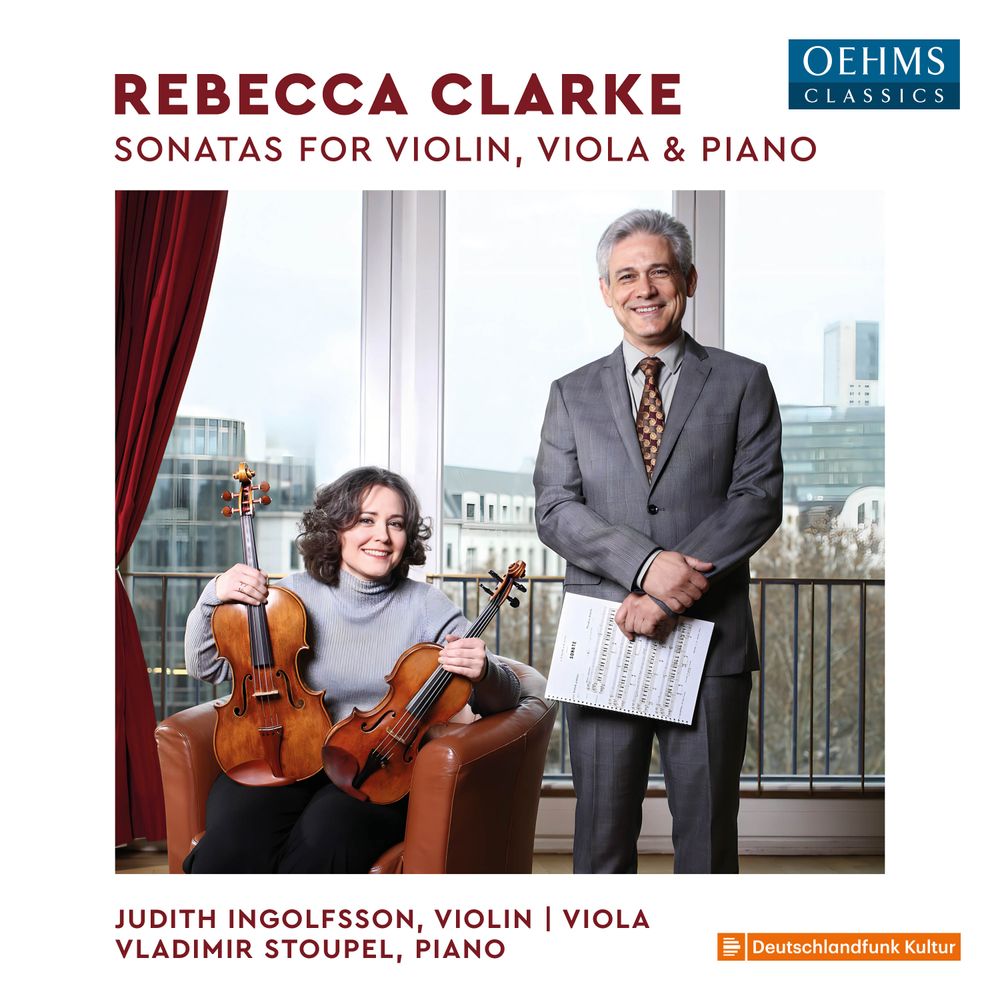
About The Ingolfsson - Stoupel Duo

The Ingolfsson - Stoupel Duo was formed with the goal of presenting
unique and dynamic duo programs that do not fit the mold of the traditional
violin-piano recital. Based on the belief that the best sonata performances
are musical conversations between two equal partners, we program "mixed" recitals
that include both important duo repertoire and unaccompanied repertoire
on each instrument. The members of this violin-piano duo are both soloists
in their own right who are passionate about presenting the classic duo
and unaccompanied repertoire alongside unusual, rarely performed or new
works in the intimate setting of a recital. Founded in 2006, they have
already performed in New York City, Philadelphia, Frankfurt, Berlin,
Potsdam, Zürich, Rome and Krakow. Upcoming concerts during the 2007-2008
season include performances in Colorado, New Mexico, Washington D.C.'s
National Gallery, Paris and Dresden.
The duo also offers the double concertos of Mendelssohn, Haydn and Alban
Berg for orchestral engagements.
Review:
FRANKFURTER ALLGEMEINE ZEITUNG, Germany
January 16, 2008
Heavenly Devil’s Trills
Duo Ingolfsson/Stoupel
The violinist Judith Ingolfsson, who won the 1998 “International Violin
Competition of Indianapolis,” performed in Frankfurt/Main at the highest
level with her duo partner, pianist Vladimir Stoupel.
The Icelandic violinist and the Russian pianist rendered with distinct
agogic Beethoven’s Violin Sonata no. 10 in G Major, op. 96 – at once
brilliant, nimble, tendentiously soft, discreet, and with thoughtfully
chosen tempos. As a duo, they showed themselves to be most advantageously
attuned to each other. Their sensitive communication made an impeccably
refined impression. Judith Ingolfsson displayed enormous solistic virtuosity
in Giuseppe Tartini’s Sonata in g-minor “Il trillo del diavolo.” As she
explained, this is her own version of the “Devil’s Trill Sonata,” which
“incorporates” the continuo accompaniment through the addition of supplementary
voices. This made this technically difficult composition even more complicated
and led to an almost permanent two-part or polyphonic texture. Judith Ingolfsson, employing
a modern violin bow, mastered all this with instinctive certainty, fluency,
and ease.
In contrast to the agogics in the Beethoven and the strong rubato with
which Stoupel played Robert Schumann’s Arabesque in C Major, op. 18 at
the beginning of the concert, Stravinsky’s Divertimento for violin and
piano, based on his ballet “The Fairy’s Kiss,” came across as vigorously
kinetic, often boisterous and dance-like.